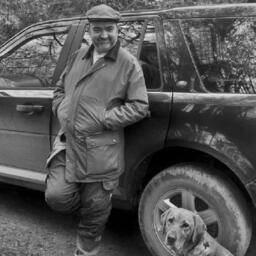
About
From a BBC Micro to security, tooling and applied AI.
I started programming at five on a BBC Micro, BASIC first and then 6502 assembly, and never really stopped. I've been paid for it since 1997. Along the way I've written pharmacy software, run hosting infrastructure, built school management systems and a telephony platform, done my time in an agency, and followed one company through two acquisitions into Cisco, where I work on security, infrastructure and applied AI.
The rest of this page is the longer version: where I've worked, how my brain works, and how I like to work.
Career
Textlocal → IMImobile → Cisco, and everything before it.
Technical Consulting Engineer
Textlocal, which became IMImobile, which became part of Cisco
Developer, then Senior Developer, then Operations Manager, and now the escalation route other teams use when a problem crosses their boundaries. The work covers risk reduction, AWS, ISO 9001 and 27001, observability, disaster recovery, automation and cost optimisation.
Twenty-six professional certificates
Cisco Networking Academy's Ethical Hacker, Macquarie's Cyber Security: Essentials for Forensics, the University of Colorado System's Applied Cryptography, UC Irvine's Programming with Google Go, Duke's Explainable AI and IBM's People and Soft Skills specialisations, plus Johns Hopkins data science, Emory and DeepLearning.AI. The full list, with certificates.
Software Developer
22blue, Bromsgrove
CakePHP applications, and the Linux server provisioning people came to rely on.
IT Technician
Malvern College
Designed the school's Asterisk telephony platform: ISDN2e, SIP, least-cost routing and voicemail.
Where it started
Professional software from 1997, beginning in Delphi. An application of mine shipped on a UK PC magazine cover disc in 1998, and another in 2001.
ADHD
Diagnosed as an adult. Reframed everything since.
I spent childhood and most of my early adult life with undiagnosed ADHD, and it caused real problems: the kind that are obvious in hindsight and baffling at the time. A diagnosis later in life didn't erase any of that history, but it did explain it, and once I understood what was going on I could start using the same traits differently.
The curiosity that used to scatter my attention now drives fast learning across disciplines. The deep-focus streaks that used to swallow whole evenings now get pointed at problems worth that kind of attention. The compulsion to fix clumsy systems, which used to mildly irritate everyone around me, turned out to be a useful professional habit once I had somewhere proper to aim it. And the unusual connections between things that shouldn't obviously relate are, more often than not, where the interesting fixes come from.
I'm not going to romanticise it or turn it into a personality gimmick. It caused real difficulty for a long time, and I'd rather be straightforward about that than package it as a quirky superpower origin story. With the diagnosis and the understanding that came with it, though, it now feels far more like an asset than a liability. It's also why I look for work substantial enough to keep the brain engaged: under-stimulating work is where the old problems tend to resurface.
Working style
Practical, direct, careful.
I'd rather ship something small and correct than something large and half-finished. I take unglamorous problems seriously, the infrastructure, compliance and observability work nobody notices until it's missing, and I add complexity only where simplicity genuinely won't do. Being the person other teams escalate to when a problem crosses team or discipline boundaries is a fair summary of the work I gravitate towards.
I keep the formal side current too. Each of those certificates puts a formal footing under something I already do: security assessment, the forensics guide on this site, the cryptography in Fury and vault, the Go behind Fury and Squish, and the explainable scoring in DAS.
Free speech
A Gold supporter of the Free Speech Union.
I'm a Gold supporter of the Free Speech Union, and I'm happy to say so out loud. I believe free speech is fundamental to any society that wants to call itself free. It is the right that protects every other right: without it you can't argue for a better law, expose a bad decision, question a powerful institution or simply tell the truth about your own life.
It isn't only about defending opinions I share. A principle that only covers the people you agree with isn't a principle at all, and the real test of a free society is whether someone can say something unpopular, clumsy or plain wrong and still keep their job, their reputation and their livelihood. Bad ideas are best answered with better ones, in the open, where everyone can weigh them up. Silencing people doesn't make an argument go away; it just drives it somewhere nobody can challenge it.
The FSU stands up for ordinary people who find themselves in trouble for lawful speech: employees disciplined over a social media post, academics hounded for their research, people who never set out to be anyone's cause. It gives them legal advice, practical help and someone in their corner when they need it most. That is work I'm glad to put my money behind, and it sits comfortably alongside the rest of this site: the privacy guide exists because being able to speak, read and think without being watched matters just as much as being allowed to speak at all.